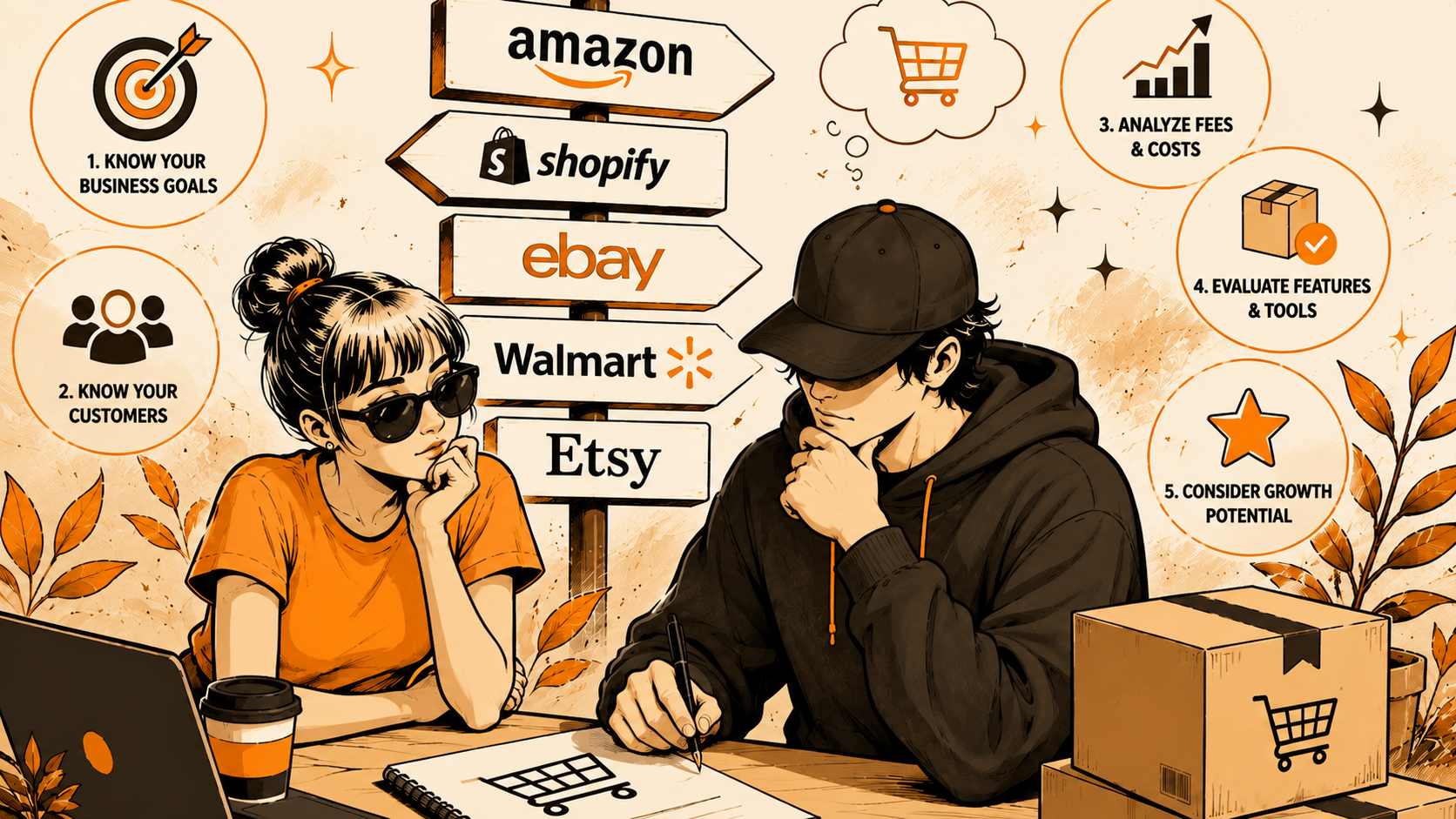
The best marketplace for your business depends on your products, target customers, budget, and long-term goals. Rather than trying to be everywhere at once, it's often more effective to start with the platform that aligns best with your business strategy and expand as you grow.
In this guide, we'll explore the strengths of today's leading eCommerce platforms to help you make an informed decision.
Amazon: Best for High-Volume Marketplace Selling
Amazon is the world's largest online marketplace, making it an excellent choice for businesses looking to reach millions of active shoppers.
Amazon is ideal if you want to:
- Reach a massive customer base.
- Sell fast-moving consumer products.
- Scale quickly.
- Leverage Fulfillment by Amazon (FBA).
- Build consistent marketplace sales.
Keep in mind that competition is intense, making listing optimization, advertising, and inventory management essential for success.
Shopify: Best for Building Your Own Brand
If your goal is to create a recognizable brand and own your customer relationships, Shopify is one of the strongest platforms available.
Shopify is ideal for businesses that want to:
- Build a professional online store.
- Customize the shopping experience.
- Collect customer data.
- Run marketing campaigns.
- Sell across multiple channels.
Unlike marketplaces, Shopify gives you complete control over your website, branding, and customer journey.
Walmart Marketplace: Best for Marketplace Expansion
Walmart Marketplace gives sellers access to millions of shoppers while offering a less crowded environment than some larger marketplaces.
It works well for businesses that want to:
- Expand beyond Amazon.
- Increase product visibility.
- Diversify revenue streams.
- Reach loyal retail customers.
- Grow through an established marketplace.
Maintaining strong seller performance and optimized product listings is key to long-term success.
TikTok Shop: Best for Social Commerce
Shopping is becoming more interactive, and TikTok Shop combines entertainment with eCommerce to create a unique buying experience.
TikTok Shop is ideal if you want to:
- Sell through short-form video content.
- Partner with creators and influencers.
- Reach younger, highly engaged audiences.
- Drive impulse purchases.
- Build brand awareness through content.
Businesses that consistently create engaging content often see the strongest results on this platform.
Etsy: Best for Handmade and Creative Products
Etsy has built a loyal community of shoppers looking for unique, personalized, vintage, and handcrafted products.
It's an excellent platform for:
- Handmade goods.
- Personalized gifts.
- Digital downloads.
- Creative businesses.
- Small independent brands.
Success on Etsy depends on high-quality listings, effective Etsy SEO, and a strong understanding of customer search behavior.
eBay: Best for Flexible Product Selling
eBay remains one of the world's most trusted online marketplaces, offering opportunities to sell a wide variety of products to customers around the globe.
eBay is well suited for:
- New products.
- Refurbished items.
- Used goods.
- Collectibles.
- Niche inventory.
Its flexibility makes it a valuable platform for businesses looking to diversify their sales channels and reach international buyers.
Should You Sell on More Than One Platform?
For many businesses, the answer is yes.
Selling across multiple marketplaces can help you:
- Reach different customer segments.
- Reduce dependence on a single platform.
- Increase brand visibility.
- Diversify revenue.
- Improve business resilience.
However, expanding too quickly without the right systems can create operational challenges. Managing inventory, orders, customer communication, and pricing across several platforms requires careful planning and efficient processes.
A phased expansion strategy often delivers better long-term results than trying to launch everywhere at once.
How to Decide Which Marketplace Is Right for You
Before choosing a platform, ask yourself these questions:
- What type of products do I sell?
- Who is my target audience?
- Do I want to build my own brand or leverage an existing marketplace?
- How much control do I want over the customer experience?
- What are my long-term growth goals?
- Do I have the resources to manage multiple sales channels?
Your answers will help determine which marketplace best aligns with your business objectives.
Final Thoughts
There isn't a single marketplace that's right for every business. The best choice depends on your products, audience, and growth strategy.
Many successful brands begin with one platform to establish a strong foundation before expanding into additional marketplaces as their business grows. By choosing the right platform—and implementing the right strategy—you'll be better positioned to build a sustainable eCommerce business that can adapt to changing customer demands and market opportunities.
Whether you're selling through Amazon, building a Shopify store, expanding to Walmart Marketplace, leveraging TikTok Shop, growing an Etsy business, or reaching global buyers on eBay, success starts with selecting the platform that best supports your vision.
Need Help Choosing the Right Marketplace?
At Ecom360, we help businesses identify the best eCommerce opportunities based on their products, goals, and growth plans. From marketplace selection and store setup to optimization and long-term management, our team provides the expertise and support needed to build a successful online business.
Schedule your free strategy consultation today and let Ecom360 help you choose the right path for sustainable eCommerce growth.


 Become a Partner